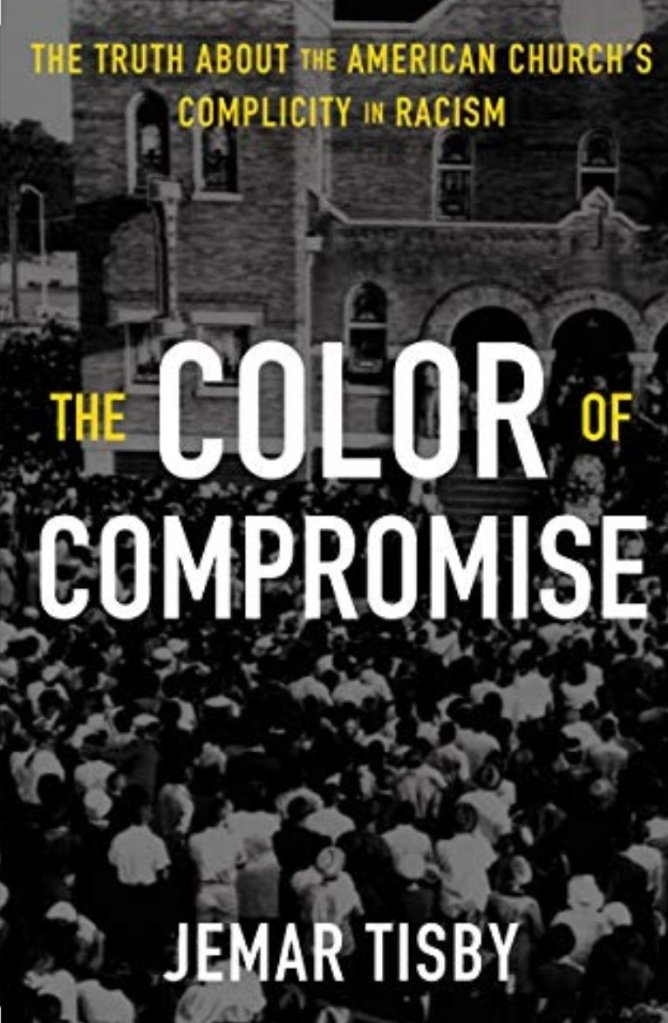
For the next few weeks, I’m sharing my biggest takeaways from the books I read this past summer. I wrote about my June read in the last post. In July, I read “The Color of Compromise: The Truth about the American Church’s Complicity in Racism,” by Jemar Tisby. This book surveys the history of racism in the United States and how the American church has actively and passively supported racism in each era of American history. The timeline of the book spans from before the United States was an independent nation, straight through to today’s Black Lives Matter movement. In each chapter, Jemar consecutively breaks down an era of American history as it relates to race relations. He discusses a major racial issue of the time period and one or two critical events that shaped the era. He then goes on to show what was happening in American churches during each time period, and how the decisions made by American churches supported and bolstered racist practices in the United States as a whole. At the end of each chapter, he reflects on what could have been done differently. When he arrives in the era of history we are currently living out – he presents the decisions the Church now faces, and asks the church not to uphold the status quo as it has in the past.
It’s hard for me to sum up this book into neat takeaways. Race relations in this country are complex. And as someone who has lived on the receiving end of racism and its effects – the content of the book felt more personal. When I think of “takeaways,” I think of someone who can read a book, learn something new about a subject, and then have the option to either apply that knowledge or forget about it and go on living life. With this book, I don’t have those options. I live here – tangled up in the web of race relations, under the weight of race relations, always within its grasp. After reading “The Color of Compromise,” I don’t have as many takeaways as I do questions. Questions about what true racial reconciliation would look like. Questions about whether racial reconciliation is even possible. Questions about Black healing. Questions for Black churches and Black religious leaders. Questions about segregation and desegregation. Questions about how the body of Christ should cope with racism and the decimation that follows wherever it goes.
Each question I am left with could probably be its own blog post. And I think I might make that happen.
But for today, if I’m going to choose a takeaway, it might be from chapter 10 which explains the different ways in which White and Black Christians view racism. Jemar talks about a book called “Divided by Faith,” by Michael Emerson and Christian Smith. That book discusses the idea of a cultural tool kit, which is a fancy way of explaining how different people see the same issue differently – based on their cultural lens. What Emerson and Smith ultimately found – as far as I understood it – is that White evangelicals tend to see racism as an individual or relational issue. In this view, racism is understood as an individual choice that a person makes. Those affected by racism are affected by individuals who made racist choices – or by their own moral inadequacies – but not by any external, overarching system. On the other hand, Emerson and Smith found that Black Christians tend to see racism as a structural issue. In this view, racism isn’t so much about what happens between two individuals – or how hard a person works to get him or herself out of a situation – as it is about the fact that there is an institutional effort to keep power within reach for certain groups of people – and out of reach for other groups of people. This part of the book really helped me to make sense of some of the more confusing interactions I’ve had with White people about race in the past.
I remember a conversation I had a few years ago with a White woman who slid up in my inbox to inform me that White people are victims of just as much racism as Black people. I’m not sure what possessed her to send me this message, but she explained how she was out shopping and a Black cashier was rude to her and nice to all of the Black customers. I acknowledged that the cashier should have been polite to all customers, but I also expressed my absolute disagreement with the idea that White people in the USA are victims of racism. I pointed to the institution of racism as a whole, and she got upset and told me that she would no longer be able to have these discussions with me (even though she started it)! I was so confused by this interaction. What was she talking about and why had she contacted me with this tomfoolery? I’ll never know. What I do know now is that she was operating from the view that racism is only about how individual people treat one another. I was operating from the view that racism is about the way our entire system works to set my race up for failure.
Something I really enjoyed about “The Color of Compromise” was how Jemar shows the weight of history’s impact on the present. Sometimes it is easy to get wrapped up in thinking about one’s life as an independent chain of events, but in reality we are all part of a much bigger story that reaches back farther than we can fathom and will reach further into the future than we will ever know. I have always been passionate about searching for and learning the stories of our ancestors, understanding their complexities, and finding themes or motifs in family narratives and/or narratives within ethnic groups that connect the past to the present. I appreciated being able to spend a little time from each chapter thinking about how the events of each era affected the people from whom I descend. Many Black people grow up with this belief that we have no choice but to be strong because of what our ancestors went through to get us to this point. Although this belief doesn’t always play out well in terms of our mental health stigmas – it still holds that any Black person whose ancestors were kidnapped and forced into slavery are descendants of resilience, descendants of survival, descendants of creativity, descendants of righteous rebellion, descendants of willpower, descendants of strength- we have greatness in our blood. It can be hard to read or think about what our ancestors went through, but ultimately I am proud of them. I am here because of them, and I owe it to them to do my best in life, to live with confidence, and to never give up. I love that Jemar’s book reminded me of that.
There is so much more I want to write, about my thoughts on this book. But I think it’ll be best if I keep it simple for now and come back to the more complex topics later. If you haven’t read “The Color of Compromise,” I would definitely recommend it! It’s a great book in terms of stepping back and looking at the big picture of racism in America and racism within the church. If you have read it – what did you think?
 wholebrownsoul.com
I loved this book. I have been following Jemar and his work for awhile and was so happy to see him publish this. It is one that I like to recommend to my Christian friends who probably share a similar sentiment to the story you described of the woman who emailed you. The idea of systemic racism is not even a concept they have considered.
LikeLike