A little over a month ago, a friend of mine sent me the link to a Red Table Talk episode about transracial adoption. It was an interesting episode in which a Black woman named Angela Tucker expressed her struggle to identify as Black after having been adopted by and raised in a White family and White community. My first impression of Angela – when she was introduced – was how proudly Black her hair and clothing were. I don’t know if she chose her own wardrobe or hairstyle, but she stepped onto the set looking like a whole queen! As she began to tell her story, I felt a lot of sadness. I know Angela will probably never see this, but there was a lot I felt I would have said to her if I ever had the chance. Hopefully I can articulate it here. Here’s a link to the episode, in case you’d like to check it out before reading on.
What is Blackness?
I’ve been thinking about Blackness a lot, lately. It really hurt my heart when Angela said she wasn’t sure whether she had the right to assimilate into Black culture. The fact that she doesn’t feel Black enough made me question her definition of Blackness. Does she think that, because she didn’t grow up in the “hood”, she doesn’t have a right to be Black? Does she think that, because she didn’t grow up in poverty, she doesn’t have a right to be Black? Does she think that, because she doesn’t code-switch between standard and Black Vernacular English, she doesn’t have a right to be Black? Does she think that those things are Blackness? If so, she trivializes Blackness – and I think that’s what hurt. Blackness may include some of those things, but Blackness is not those things.
In reality, there was a one drop law. Historically, one drop of “Black blood” makes her Black in this country – eligible for all of the struggles out of which the various aspects of Black culture were born. She may have grown up feeling disconnected from the rest of us, but when the White world sees her – they see her as one of us. And she absolutely has the right to explore, embrace, assimilate, and settle into Black culture.
Representation – or Lack Thereof
Angela currently works to help families navigate transracial adoptions, and so I thought it was interesting that Angela mentioned her opposition to the idea of transracial adoption. She feels grateful for her parents and loves them, but also feels that because she was transracially adopted – she doesn’t have a strong sense of identity. She now feels “illegitimate” around Black people.
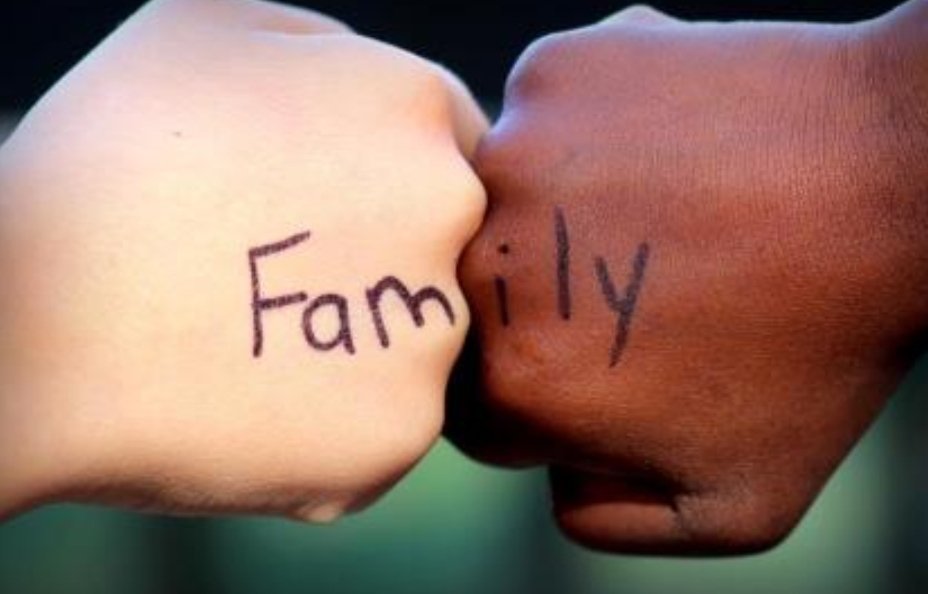
Personally, I don’t think that being transracially adopted is the problem. A family is a family, and love is love. However, I do think that American White people looking to adopt non-White children should make sure that their child’s ethnic background is well represented in the home and in their community. I’m not shaming Angela’s family. They did what they could, they loved her, they provided for her, and she is part of them.
But let’s be real.
Whiteness is valued in America. White standards of beauty. White standards and methods of education. White folklore, literature, and history, White social norms. People and things are assumed White unless stated otherwise. White is the default. What Angela experienced in her home, in terms of a lack of representation, is really just a microcosm of what Black people experience in American society. We don’t see ourselves. This is starting to change in recent years, but we don’t see ourselves. We haven’t been included. Inclusion has to be an intentional act.
If Angela’s parents had been intentional (and I’m making the assumption that they weren’t) about putting Angela in Black spaces, providing her with Black community, Black literature, Black art, Black history – I think she would have found herself there. She wouldn’t be feeling so out of the loop. Black people need Black spaces. We need it. Representation is important, and because Angela lacked that she now struggles to feel “legitimate” in her Blackness.
The Fear of Black Spaces
One of the words Angela kept using to refer to her feelings about getting in touch with her Blackness was “fear.” This hurt, too. Early on in the interview I kept asking myself why the word “fear” kept coming out of her mouth when referring to her own people. I was so grateful when Jada’s mother interrupted her and asked her directly why she was feeling fearful. I jumped to conclusions about how Angela was probably raised in a community that feared Black people and Black spaces. Was she taught to fear Black people by her community? Were they the type of family/community that “didn’t see color,” but never made intentional efforts to get to know people outside of their own affinity groups? Had Angela been raised in the type of community that made her feel that she wasn’t Black Black?
I hate that people fear Black spaces. And not just White people. Black people sometimes fear Black spaces as well. When Jada and her family suggested that Angela go into some Black spaces, Angela’s seeming unwillingness to do so seemed to be rooted in fear – but also maybe in her stated feelings of illegitimacy. This is my opinion, but Blackness is largely communal. If you want to feel Black, a large part of that is being in Black spaces. There’s a T-shirt that says, “I can do all things through the Black people rhythmically chanting “Aye” who stregthen me.” It’s a silly shirt, but I think it points to a bigger truth that – for all of our problems and divisions – we are still a people group with a largely cohesive and communal mindset. A lot of the confidence of Black culture comes from being Black together. Regardless of how different each individual Black person might be from another Black person – there’s still that unspoken understanding of having lived through many of the same experiences. It’s that subtle headnod or dap up that really means, “I know.” It’s a silent solidarity. If Angela would put herself in Black spaces, I think it would help her to begin feeling more comfortable in her Blackness.
She would also find that…
Blackness is Not a Monolith
If I could say anything directly to Angela, it would be that your experience IS the Black experience because you are Black. You’re not less Black because you were raised by White people. I met up with a woman a few weeks ago who said something to me that I’ve been thinking about ever since – “Same slave ship, different plantation.” For the most part, we all came to this country in the same way. What brought you here is your Blackness, where you ended up after that doesn’t make you less Black.
The idea that Black people are all the same is the result of Whiteness being the default in our society. White people are allowed to be individuals because their culture is the default and everyone else’s culture is “different,” “ethnic,” “unique,” or “interesting.” People coming from a non-White culture are often assumed to represent their entire culture to the White world – as opposed having the freedom to simply represent themselves. And although the stereotypes would have you believe that you have to act, look, speak, dress, or be a certain way to be “Black,” – the truth is that there are so many variations among us because we are – like everyone else – individuals that are part of a larger group.
And ultimately, whether you feel Black or not – you still have had to live with the same strain and exhaustion of being Black in this country.
Privilege by Osmosis
Angela described herself as having privilege by osmosis. Her parents and her community were there to vouch for her. She was safe in her world because she was known and accepted – despite her differences. But unfortunately, the love of her White family can not protect her from the consequences of being Black. When she moved out and went to college, she quickly realized that just because she felt comfortable with White people didn’t mean that all White people would view her the way her community had. She chose a White college because she thought it would make her the most comfortable and be closest to what she’d experienced at home – but she quickly found herself a target of tokenism. Tokenism is a type of racism where a minority person is fetishized. Everyone wanted to touch her hair, people wanted to put her picture on the website (or perhaps other campus literature) to prove that there were “minorities” at the school, people were overly interested in her. Angela says that at first she felt flattered and popular, but then realized that she was only recieving this attention because she was Black. It was then that she started thinking about her Blackness for the first time, but because she was in a White school – she had no other Black people to process this with. Sometimes people tell a story from their life and you just have to sit back a minute because you felt it. I felt this. A lot of what she experienced in college, I’ve experienced in other times of my life when in predominantly White spaces. I loved that Jada’s mom made the comment to Angela that she “has some idea of what it’s like being Black in the world,” because Angela, navigating your Blackness within White spaces is an intrinsic part of the Black experience in America.
The Irony of it All
As I was chatting with the friend who sent me this link, I came up with kind of an overall summary of Angela’s life, based on what I was hearing in her interview. She grew up in a White family, she knew she was different but she knew she was loved. There were times where she wanted her dad’s blue eyes or her sister’s silky, flowing hair – but she was loved and so she was happy. Her community had showered her with love and provision, but had not prepared her for the fact that she would still one day enter the world as a Black woman. When the time came for her to enter the world – she began to feel a sense of displacement. She’s not White. And yet she doesn’t feel Black. She’s in a no man’s land. And so she begins to work with other transracial adoptees – creating her own communities with them and working to influence the culture of transracial families.
Which, ironically, is exactly the the state of Black people in America.
Stolen from our motherland, our ties to our heritage are severed – and yet we aren’t truly “home” in the United States, either. We aren’t loved. We aren’t valued. We aren’t included. We are simply tolerated. We’re in a no man’s land. And so we create our own culture. We create our own community – and that is our home. That is where we are loved, valued, and included. For many, feeling displaced IS the Black experience. And she’s living it, all the while claiming not to understand what it means to be Black.
 wholebrownsoul.com
Thank you for everything you said. I identify a lot with Angela. I need to print this out and read it over again. Thank you, Lauren.
LikeLike